
A rhythm can cross a border on a record. What happens next depends on the people who hear it.
They learn it, dance to it, play it with different musicians, and give it a place in their own lives. Over time, something recognizable can become something distinctive. Salsa offers a compelling example: a musical tradition with deep roots that kept growing as communities made it their own.
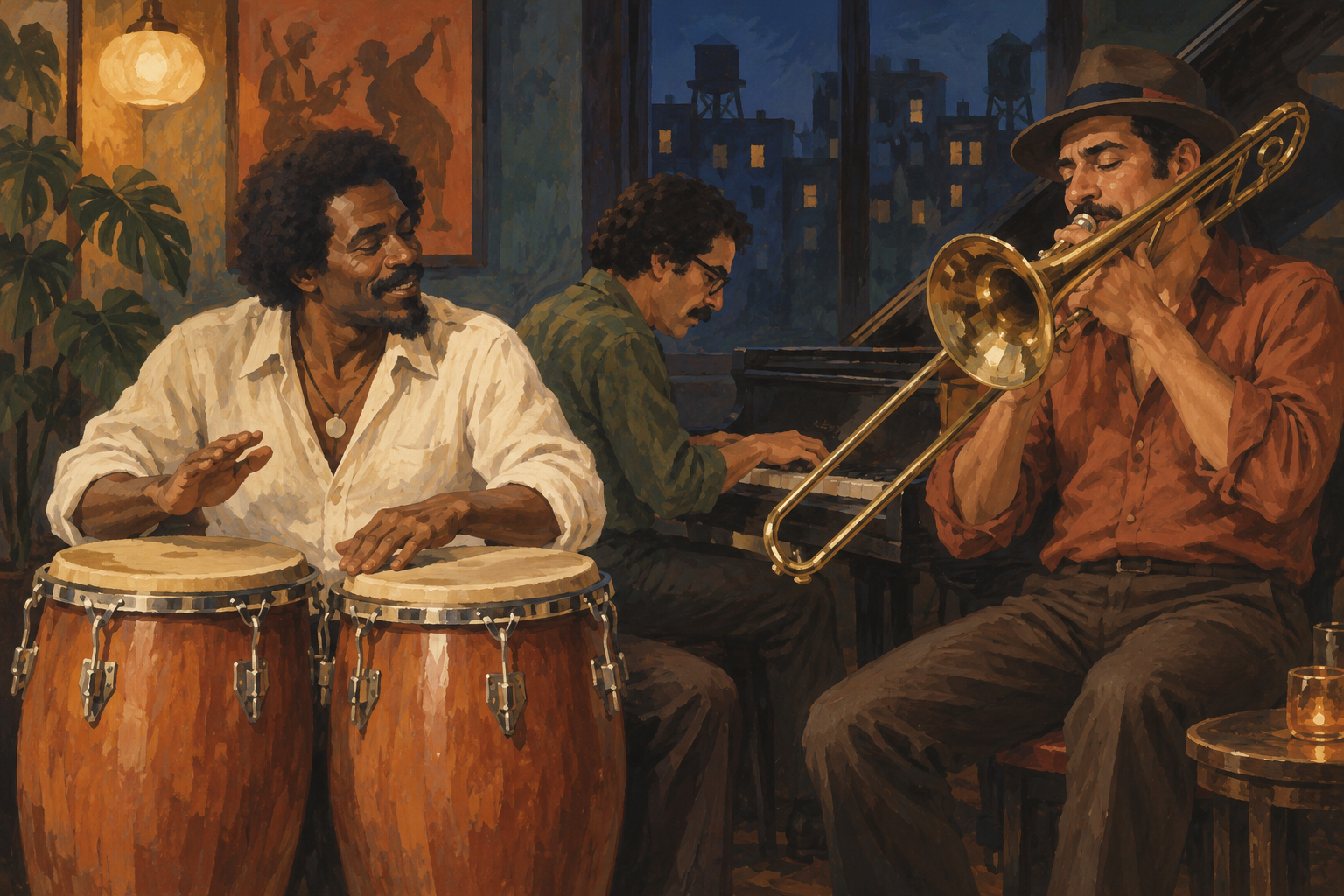
Before the name, there were the roots
Salsa’s history reaches back long before the word became a familiar label. Its foundations include the musical knowledge of enslaved Africans and their descendants in the Caribbean, and the traditions they sustained and transformed under slavery and colonial rule. This was a history of forced displacement as well as extraordinary cultural resilience.
In Cuba, African and Spanish influences developed into forms including son, while Afro-Cuban rumba became another important part of the musical inheritance. Percussion, song, strings, and dance came together through a long process of exchange. Smithsonian Folkways traces these intersecting traditions and their influence on later popular music.
The Smithsonian’s Salsa’s Roots exhibition identifies Cuban son and rumba as ancestors of contemporary salsa, with clave as a rhythmic foundation. That foundation matters: the music’s capacity to evolve grew out of deep knowledge of existing traditions.
New York gave the music a new setting
By the mid-twentieth century, New York was an important meeting place for Caribbean musicians and American jazz. Machito and his Afro-Cubans were already helping shape this exchange from the 1940s, well before the salsa boom. The Library of Congress documents their lasting influence on Afro-Cuban jazz and salsa.
In the 1960s and 1970s, salsa surged through New York’s Puerto Rican neighborhoods. Cuban musical forms met Puerto Rican influences and jazz in the work of musicians from several backgrounds. The Smithsonian’s account of the cuatro and Latino identity places this community setting at the heart of the story.
A small instrument makes the exchange tangible. Puerto Rican musician Yomo Toro brought the cuatro, a stringed instrument rooted in his island’s traditions, into salsa during the 1970s. As the Smithsonian’s profile of Toro explains, he carried an inherited sound into a changing musical world.
Salsa took shape through this ongoing encounter. Calling it a sudden invention in one city misses the generations of knowledge behind it, and the many musicians who kept adding to it.
Cali made the dance floor its own
In Colombia, Cali became a powerful center of salsa culture. Its contribution extended beyond listening to imported music. Local dancers, orchestras, collectors, and event organizers built a distinctive scene around it.
A history published by Cali’s cultural authorities describes the role of the city’s fair, dance competitions, and orchestras in that development. Cali’s fast, intricate footwork helped give the music a recognizable local expression. The audience became part of the creative process.

That culture supports many kinds of work. Cali’s description of its salsa heritage recognizes musicians and dancers alongside costume makers, instrument makers, collectors, researchers, and journalists. A travelling sound became part of a local cultural and economic ecosystem.
What can innovation learn from salsa?
Salsa invites us to look more carefully at what travels. A recording can carry a performance. It cannot, by itself, recreate the relationships, accumulated skills, gathering places, or audiences that make a musical scene flourish. Those have to develop in the new setting.
For someone exploring an idea from elsewhere, the parallel is useful. Understanding the visible result is only a beginning. You also need to understand how it works, what people value about it, and what conditions allow it to take root.
Our Objective, Mechanism, and Conditions lens offers one way to reflect on that process. These are questions we bring to the story, rather than a formula its musicians set out to follow.
- Objective
- What do people want to create or experience? Here, possibilities include expression, belonging, and the pleasure of moving together.
- Mechanism
- How does that happen? Shared rhythmic structures, practiced musicianship, and the exchange between performers and dancers help turn individual contributions into a collective experience.
- Conditions
- What has to be true for that mechanism to achieve the objective? Consider the skills, relationships, spaces, and audiences that allow people to participate and keep the tradition alive.
Carry the learning. Credit the roots.
Learning across borders also carries a responsibility to recognize the people and histories behind what we encounter. Salsa’s African and Caribbean roots remain central to understanding its evolution, even as new communities contribute to its future.
For cross-border innovation, the lesson is to pay attention to both inheritance and adaptation. Learn what gives an idea its strength. Work with the people who understand the new setting. Leave room for their knowledge to change the outcome.
A question to take with you
What could your community add to an idea from elsewhere?
Think beyond reproducing the finished result. Consider the local skills, relationships, and cultural knowledge that could help it take a meaningful new form.
Keep exploring
The sources linked throughout this article offer further historical context. For an additional introduction to salsa’s story, explore the video below.
Watch the salsa video on YouTube ↗